Electrician Sales Training: How to Build a Team That Closes
Electrician sales training doesn't get talked about enough, and it's costing residential contractors real money. In home service, close rates are driven less by technical ability than by how clearly your technicians can explain what they found and what the homeowner should do about it.
Most electrical business owners know this gap exists on their team. Fewer have a repeatable system for closing it. This guide covers the specific tactics, call structure, scripting, objection handling, and coaching routines that build a team that doesn't just do great work but actually sells it.
Give Every Tech a Call Structure
Most technicians struggle in customer conversations because they’re improvising. A consistent framework can change that.
Every service call should follow the same basic structure: a professional introduction that sets expectations, a diagnosis, a detailed explanation of what the technician is seeing in plain language, a clear presentation of options, and a direct recommendation with a next step.
The difference it makes: one tech may say the panel is overloaded. A more polished tech would say the panel is handling more than it was designed for. Over time, that creates safety risks and shortens your system's lifespan. Let me walk you through a couple of ways to resolve the issue.
Both describe the same problem. The second provides the customer with something to act on.
Build Skills Through Repetition
Communication skills come from deliberate practice, not classroom training.
The most effective teams run short role-play sessions before the first call of the day, using real jobs on the schedule as the material. Work through objection scenarios, too: price questions, stalls like “I need to think about it,” and requests for second opinions. Add ride-alongs so a manager can coach in real time.
Recent research on sales performance shows that top-performing teams invest heavily in ongoing skills development and structured coaching rather than relying on one-off training sessions. This is exactly the kind of repeated, scenario-based practice that strengthens real-world sales communication. Keep it low-pressure and build the habit.
Scripts as Guardrails
Scripts get a bad reputation because most people misuse them.
The goal is to make sure techs don’t skip the moments that count: the opening of the call, the explanation of findings, the presentation of options, and the transition to price. Leave flexibility everywhere else.
If experienced techs push back, have them run the structured approach for a week alongside their usual method. Consistency usually wins the comparison.
Translate to Outcomes
Customers think in terms of outcomes, not technical jargon. When a tech leads with a component, the customer hears nothing useful.
Train your electricians to frame every finding around four questions: What’s the problem? Why does it matter? What happens if nothing is done? How does this fix it?
Before: You need a new breaker.
Better: This breaker isn’t reliably shutting off power, so your system isn’t protected the way it should be. Replacing it restores that protection.
That shift from component to consequence is what moves customers to say yes.
Rapport as a Learnable Habit
Some techs are naturally good with people. The ones who aren’t can still learn it.
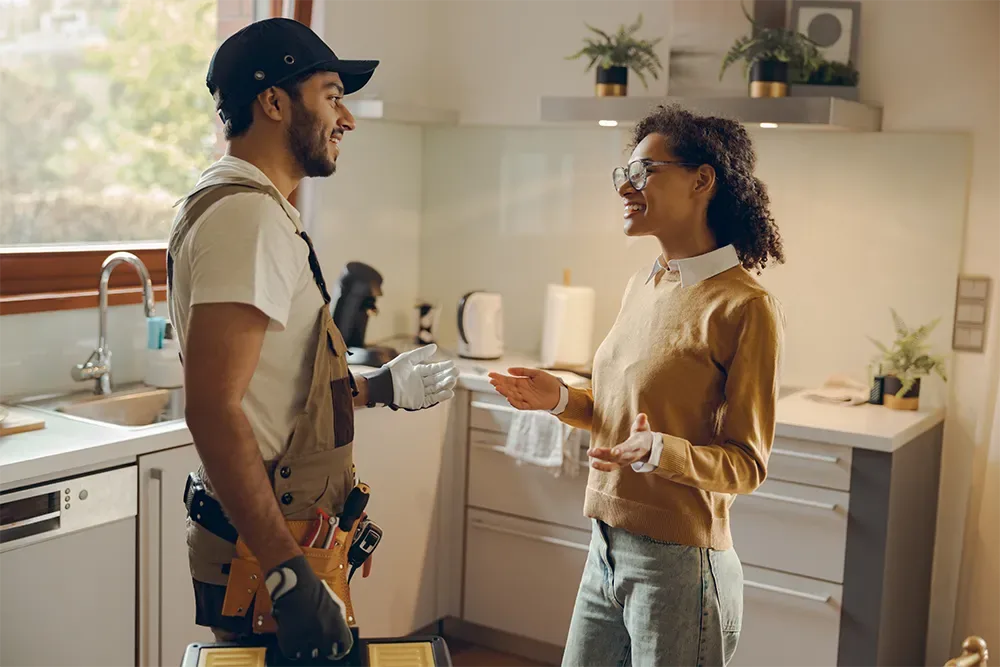
Train your team to notice something in the home (a photo, a pet, a project in progress) and say something genuine about it. Ask one or two simple questions, then listen before moving on. The goal is a moment of connection that makes the rest of the call easier. Customers who feel comfortable are more likely to follow a recommendation.
Coach the Conversation
Most managers evaluate a job based on technical execution. That covers half the picture.
To improve communication, coach on it. After calls, ask: How did you explain the issue? What options did you present? How did the customer respond? What would you say differently?
These check-ins don’t take long. Ride-alongs are especially valuable: when you hear the conversation firsthand, your feedback becomes more specific.
Align the Whole Experience
The customer experience begins before your electrician knocks on the door.
A pre-arrival text with the technician’s name and photo sets a professional tone before any conversation begins. Consistent uniforms reinforce that tone. When language remains aligned across dispatch, the technician, and any follow-up communication, the entire interaction feels organized. Customers arrive more receptive when the experience feels consistent from the first touchpoint.
Reward What You Want
Build communication into how you measure success, and behavior follows.
Start with something concrete, such as tying bonuses to customer reviews or building recognition for strong satisfaction scores. When communication shows up in how you measure performance, your team gets the message.

Frequently Asked Questions About Electrician Sales Training
What is electrician sales training?
Electrician sales training teaches technicians how to communicate recommendations, explain options, and help customers make informed decisions.
Why do electricians need sales training?
Technicians regularly identify problems and recommend solutions. Training helps them explain those recommendations clearly without making the conversation feel like a sales pitch.
How can electrician sales training improve close rates?
A consistent process helps technicians ask better questions, explain the value of repairs or upgrades, and present options with greater confidence.
Should electricians use scripts when talking to customers?
Scripts can help with consistency, but technicians should understand the process rather than memorize rigid responses. Natural conversations tend to build more trust.
How can electricians sell without being pushy?
Focus on the customer's problem, explain what you found, present clear options, and let the homeowner decide. The goal is to educate rather than pressure.
What should technicians learn during electrician sales training?
Training should cover communication, customer questions, presenting options, explaining value, handling concerns, and confidently asking for the next step.
Can sales training help electricians increase average ticket value?
Yes. When technicians consistently identify legitimate needs and clearly present available solutions, customers are more likely to choose the work that makes sense for them.
How do you make electrician sales training stick?
Give technicians a repeatable process, practice it regularly, and reinforce the same expectations through coaching and accountability. Service Nation emphasizes ongoing training and implementation rather than one-time instruction.
How Service Nation Supports Electrician Sales Training
The electrical teams that excel at communication put in deliberate work, and most of them will tell you they got there faster by learning from contractors who had already solved the same problems.
Service Nation gives you access to training resources, peer communities, and real-world strategies from contractors who are already doing this at a high level. Join Service Nation and start turning better conversations into better results.