
6 Steps to a Sales Process for Service Technicians That Works
Most owners have seen a well-meaning sales initiative fail in the field. You introduce it, the techs agree in the meeting, but then nothing changes. That’s not a people problem; it’s a process problem.
Your technicians didn’t get into trades to sell. They’re problem-solvers. A sales process for service technicians gives them a simple, repeatable framework without turning them into traditional salespeople. The goal is to help them feel confident they’re doing their jobs well.
Here’s a framework that works, because it doesn’t ask techs to be something they’re not.

Why Technicians Resist Selling
The resistance is real, and it’s worth understanding before you try to change it. Most techs associate sales with pressure tactics they’ve seen go wrong. They worry that recommending upgrades will make customers think they’re being taken advantage of. And nobody likes putting an option on the table and hearing no.
Those concerns don’t disappear with a script. They go away when a technician understands that walking a homeowner through their options is a part of the service, not something layered on top of it. When that shift happens, the whole dynamic on the call changes.
Start by Assessing What You Already Have
Before you build anything new, take a hard look at how your calls are running right now. Most shops have a process, even if no one’s written it down. The question is whether it’s working.
Start with your tools. Are your techs using a consistent system to log calls, track leads, and document what happened on each job? If that information lives in five different places, or only in someone’s head, you’re already losing ground.
Then look at your leads. Where are they dropping off? A customer who called in, scheduled a visit, and then didn’t book a signal worth investigating. Are techs presenting options on every call, or only some? Are follow-ups happening at all?
Gaps in follow-up are one of the most common and fixable revenue leaks in service businesses. Centralize your systems so nothing falls through after the call ends. Once you know where the current process is breaking down, you know exactly what the new one needs to fix.

Why a Process Works Better Than a Script
Handing out scripts is one of the most common mistakes in HVAC technician sales training. Scripts might hold up in a call center, but they fall apart the moment a homeowner asks something unexpected, which is every call.
A sales script tells a tech what to say. A home service sales process guides how they manage the conversation. That distinction matters in the field. A process gives techs a consistent structure to follow while still leaving room to sound like themselves. The rhythm of the call remains the same; the words don’t have to.
And the benefits go beyond individual calls. When your whole team follows the same process, performance becomes more consistent and easier to coach. Productivity increases because techs spend less energy figuring out what to do next on a call. Customer relationships strengthen because homeowners receive the same professional experience, no matter who shows up. The business becomes easier to scale, and win rates reflect it.
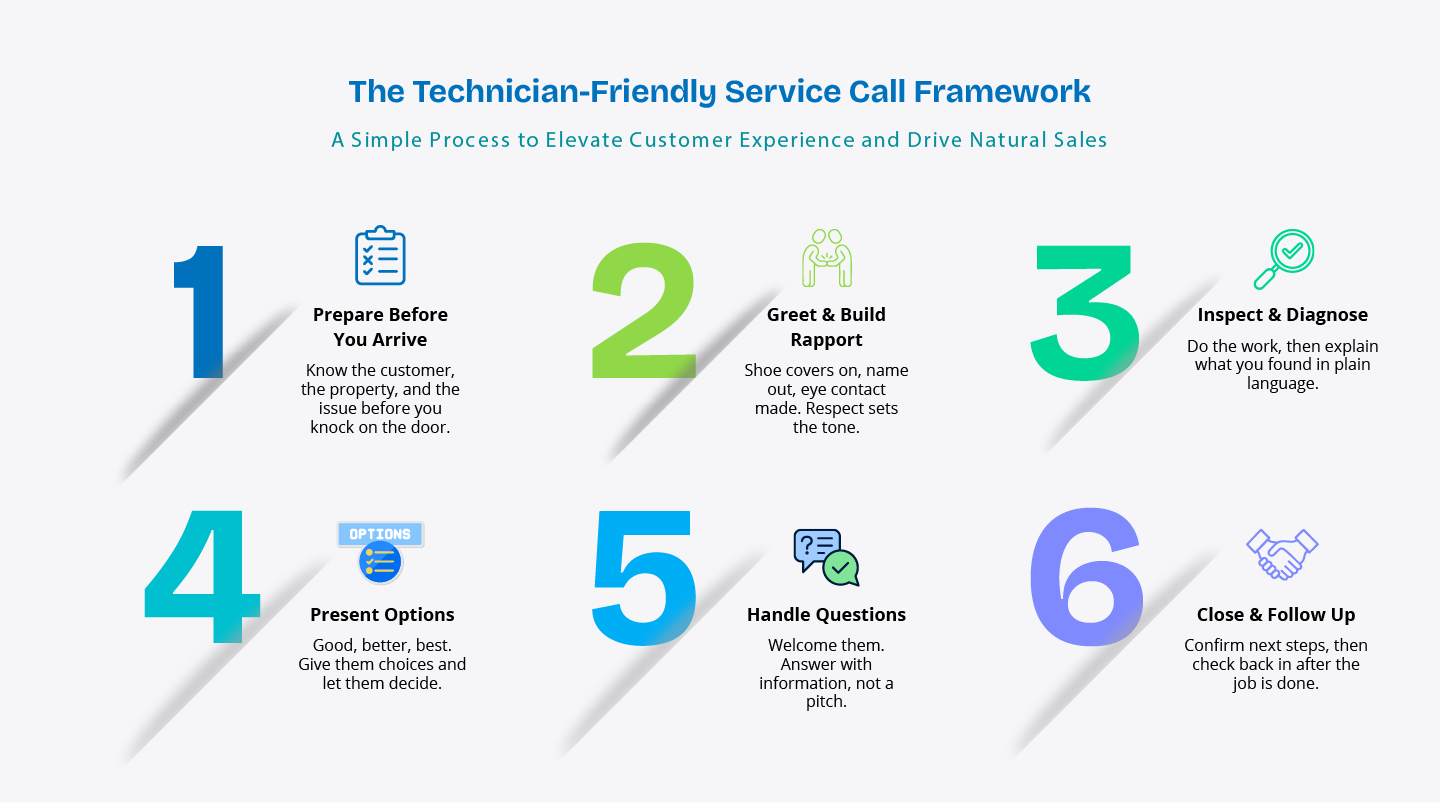
The 6-Step Service Call Framework
Step 1: Prepare Before You Arrive
Good calls start before the tech pulls into the driveway. Know how the customer found you, what they called in about, and any notes from the initial conversation. If the customer had a prior service visit, review that history. Walk in knowing something about the property and what the customer’s goals are likely to be. A tech who arrives informed earns trust faster than one who’s starting from scratch at the door.
Step 2: Greet and Build Rapport
First impressions carry through the whole call. Put on shoe covers, introduce yourself clearly, and make eye contact, because customers who feel respected from the start are far more open to recommendations later in the conversation.
Step 3: Inspect and Diagnose
Conduct a thorough evaluation, then clearly explain your findings in simple language. That’s where your tech’s expertise builds credibility. When a customer understands the problem, they’re ready to hear about solutions.
Step 4: Present Options
Offer three choices: a baseline repair that handles the immediate problem, a mid-tier option with better efficiency or durability, and a premium solution with the strongest warranty and long-term performance. When customers see their options clearly laid out, they feel like they’re making a decision rather than being pushed toward one.
Step 5: Handle Questions
Listen before responding. Customers who ask questions are engaged, and that’s a good sign. Train techs to welcome questions instead of rushing past them. Sharing what other homeowners in similar situations have found helpful goes a long way toward any scripted rebuttal. Information does more work than persuasion.
Step 6: Close and Follow Up
Once a customer makes a choice, clarify the next steps and move forward. A good close is just the end of a good conversation. And the job isn’t done when the truck pulls away. Follow up to confirm the customer is satisfied and to stay on their radar for future service needs. That’s how long-term relationships are built.
How to Present Options Without Pressure
The good/better/best model works because it puts the decision in the customer’s hands. The tech’s job is to explain, not to steer.
Frame each option around how it benefits the customer. Cover what it fixes, what it costs to own over time, and what comes with it. Avoid the instinct to push toward the upgrade. Customers who feel they have real choices and that their budget matters are far more likely to move up the options on their own. Make sure every customer understands what’s available to them. That’s the whole job.
Tracking and Coaching without Micromanaging
You can’t improve what you don’t measure, but the wrong metrics will kill morale fast. Start with three numbers: average ticket, close rate, and how often techs present multiple options per call.
Review performance in context. Pull a recorded call or debrief after a service visit, and ask questions rather than lead with criticism. Understanding where the conversation shifted will get you a lot further than saying they should have pushed harder.
Encourage techs who consistently run good calls to share how they do it. Peer learning sticks in a way that top-down coaching doesn’t. Recognize progress before it shows up in revenue. A tech who gets more comfortable presenting options is on the right track, even if the numbers aren’t there yet. When technicians feel you’re invested in their development rather than looking for mistakes, they start to own their results.
Putting It All Together
Consistency is the whole game. When every tech runs the same six-step structure on every call, customers get a predictable, professional experience. And your team builds confidence through repetition.
You don’t need to overhaul everything at once. Start by auditing your process, close the gaps in your systems, build up your team, and then introduce your framework one step at a time in your weekly meetings. Within a month, that becomes second nature.
Common Questions About Finding Great Technicians
What is a home service sales process?
A home service sales process is a structured way technicians handle service calls, from arrival to follow-up. It helps them guide conversations, present options, and close jobs without pressure.
Why do technicians struggle with sales?
Most technicians resist sales because they associate it with pressure or manipulation. A clear process helps them focus on solving problems and educating customers instead of selling.
What is the best sales framework for service calls?
A simple six-step framework works best: prepare, greet, inspect, present options, handle questions, and follow up. This structure keeps calls consistent and easy to follow.
How do you present options without being pushy?
Use a good/better/best model and explain each option clearly. Focus on benefits, costs over time, and outcomes, then let the customer decide without pressure.
What metrics should contractors track in their sales process?
Contractors should track average ticket, close rate, and how often technicians present multiple options. These metrics show how well the process works without micromanaging.
Ready to Go Further?
Service Nation members get access to resources, tools, and a network of contractors who’ve built exactly this kind of process in their businesses. If you’re not already a member, find out how joining can help your team run better calls and grow more consistently.